Weather Advisory
Einstein will resume normal operations Tuesday, January 27.
Cores
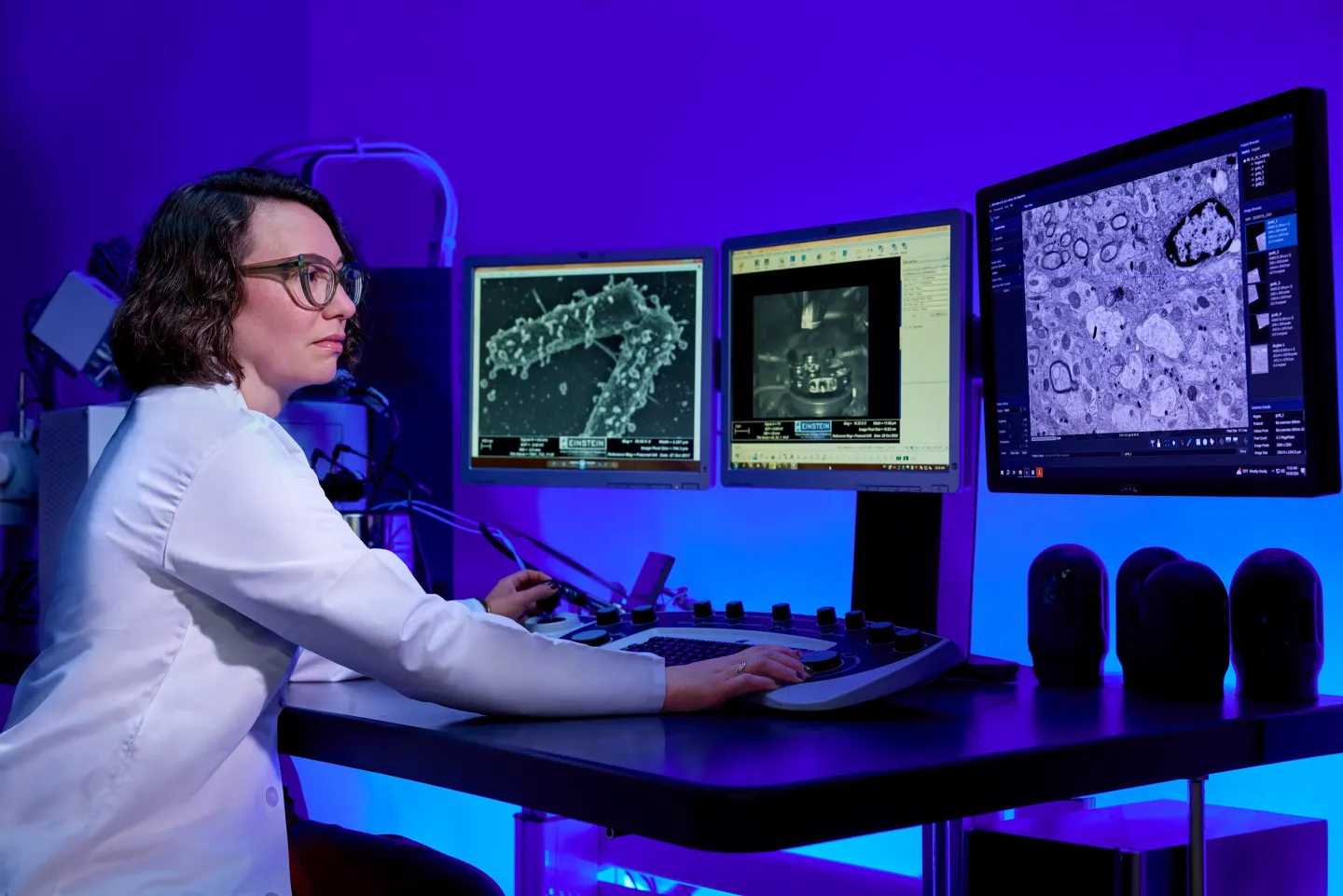
The AIF supports both Electron and Light microscopy. The AIF also has a variety of image analysis programs. Please click on the category of interest.
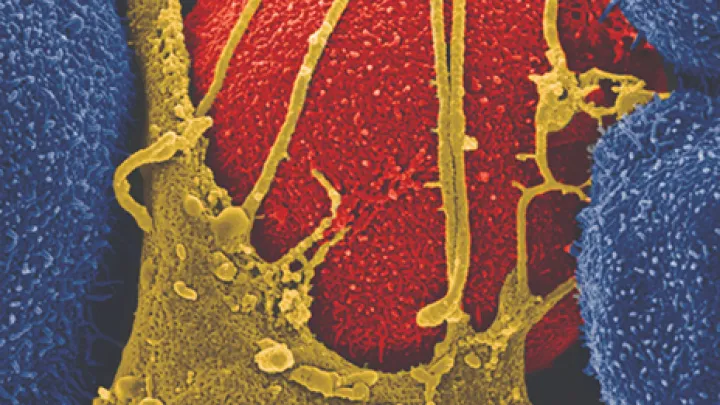
Microscope in which a beam of electrons is transmitted through an ultra-thin specimen, interacting with the specimen as it passes through it.
Microscopes:
Highlighted Features:
Microscope that produces images of a sample by scanning it with a focused beam of electrons. The electrons interact with atoms in the sample, producing various signals that contain information about the sample's surface topography and composition.
Microscope:
The expert staff can design a specimen preparation protocol to optimize cellular preservation tailored to your individual experiment objective.
Information:
Microscopes with digital cameras for epifluorescent or brightfield samples.
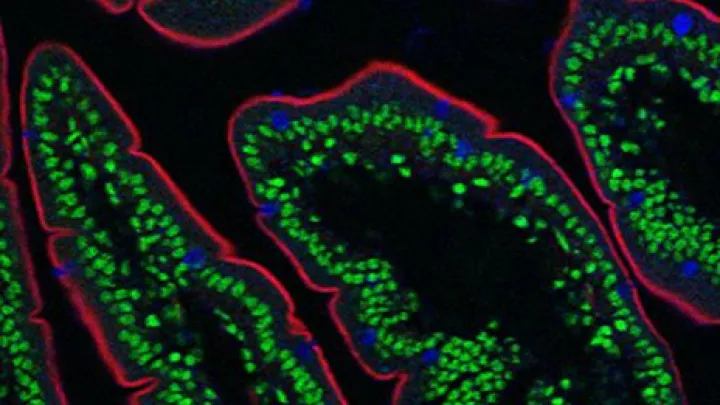
Microscopes for fluorescent samples that need high resolution.
Point scanning confocal:
Spinning disk confocal:
Microscope with pulsed laser for deeper tissue imaging.
Microscope with optical resolution beyond traditional diffraction limit, for fluorescent samples.
High capacities, high resolution scanner for immunohistochemistry or fluorescence stained slides.
The AIF provides two high-end computer workstations and supports several image analysis packages that can be used for visualization, quantification and restoration of light microscope and electron microscopy image data. The AIF advises and trains users on proper ways to generate data and perform quantitative data analysis on their own. Image analysis can also be conducted on an assisted basis by the AIF staff.
Supported Software:
Digital Station #2
Digital Station #6/SKY
Hamamatsu Scanner
Leica SP8
Leica Stellaris 8
Leica Thunder
Nikon CSU-W1 Spinning Disk
Nikon Super Resolution
Olympus Multiphoton
Olympus Stereo
Zeiss Axio Observer CLEM
3D Histech P250 High Capacity Slide Scanner