

Video could not be played
Human Longevity Studies
The Human Longevity Studies at Albert Einstein College of Medicine’s Institute for Geroscience aim to discover the biological and genetic contributors to healthy aging and longevity. Between the three ongoing studies, we have enrolled more than 3,000 participants, many of whom are “superagers,” people who live to age 95 and older in good health. Our investigators are researching how and why these superagers achieve this milestone through genetic and other measures of the participants and their children. Contact us at LongenityStudy@einsteinmed.edu to initiate a collaboration.
Longevity Genes Project
Since 1997, Einstein investigators have examined the genetic secrets of “superagers,” men and women who live past 95 without significant medical problems. Specifically, researchers examine the genetic advantages that protect superagers from significant age-related diseases and allow them to live in good health well into old age.
Key Discoveries
- Longevity is highly correlated with high HDL (“good”) cholesterol, which is associated with the CETP gene.
- The CETP gene is also associated with the prevention of cognitive decline and Alzheimer’s disease.
- Centenarians have functionally significant mutations in insulin-like growth factor-1 (IGF-1) and IGF-1 receptor, which result in less functional growth hormones.
- The hypothalamus, which regulates hormone production, remains functional in centenarians.
LonGenity
The LonGenity study began in 2007, enrolling men and women aged 65 and older—both those who are the offspring of superagers and those whose parents do not have exceptional longevity.
Key Discoveries
- Offspring of centenarians live longer and healthier than their peers.
- Lower levels of IGF-1 are associated with longer survival and lower incidence of age-related diseases, such as cancer, cardiovascular disease, and cognitive decline.
- Less inflammation in the hypothalamus is associated with better cognition.
Video could not be played
The Future of Longevity Research
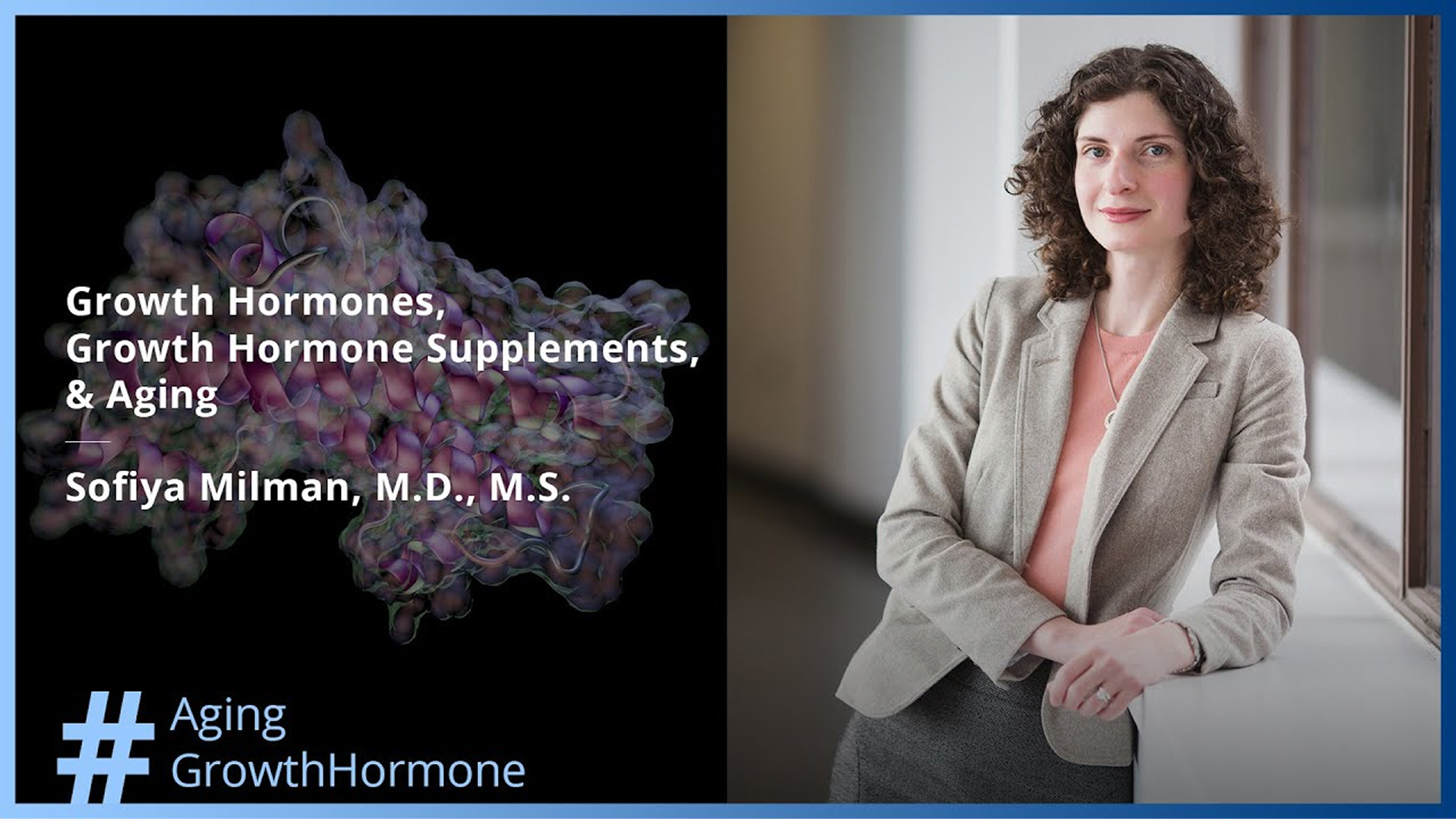
Sofiya Milman, M.D., director of the Human Longevity Studies at Einstein, discusses the goal of aging research at Einstein, and recent discoveries from the LonGenity Study.
LifeLong Study
The LifeLong Study seeks to understand how genetic factors related to longevity affect healthy aging throughout life with the goal of preventing age-related diseases. Younger individuals, age 20-40 years, offer comparison between youthful and older biology. The study launched in 2019.

Video could not be played
SuperAgers Family Study
Einstein investigators, in collaboration with the American Federation for Aging Research, lead the SuperAgers Family Study. Our goal is to uncover genetic and biological mechanisms that protect against human aging and age-related diseases and contribute to the discovery of novel treatments to target aging and aging-related diseases.
Faculty
Director

Video could not be played
Sofiya Milman, M.D., M.S.
Investigators

Video could not be played
Sandra Aleksic, M.D.

Video could not be played
Nir Barzilai, M.D.

Video could not be played
Anna E. Bortnick, M.D., M.S., Ph.D.

Video could not be played
Wei Chen, M.D., M.S.

Video could not be played
Eric R. Reed, Ph.D.

Video could not be played
Aditi Shastri, M.B.,B.S.

Video could not be played
Erica F. Weiss, Ph.D.

Video could not be played
Kenny Q. Ye, Ph.D.

Video could not be played