
Video could not be played
Cell Biology Research
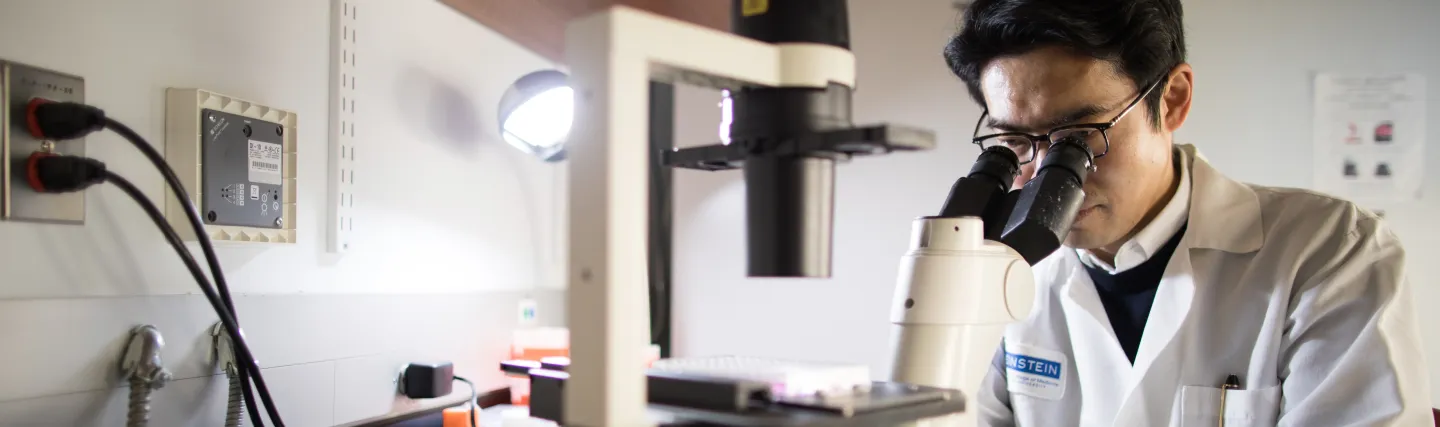
Investigators in the Department of Cell Biology at Albert Einstein College of Medicine perform perennially outstanding research to advance imaging, cell isolation, and molecular techniques; broaden key insights at the single-cell, subcellular, and single-molecule levels; and increase integration with advanced computational biology. Our scientists’ innovative efforts consistently attract top-tier funding from the National Institutes of Health (NIH).
Foundational Research Categories
Investigators in the Department of Cell Biology pursue basic science and translational research across seven dynamic research themes and more than 25 specific topics, broadly spanning three foundational categories: basic intra-cellular processes, physiological and disease processes, and technology and applied approaches.
Researchers who study basic intracellular processes focus on topics including cell death and senescence; cellular metabolism; chromatin biology and gene regulation; DNA replication and repair; glycobiology and glycomics; membrane trafficking; mitochondria biology; RNA processing, splicing, and modification; and signal transduction. Cell biology investigators explore these questions using a broad range of experimental systems and research tools. Specialized assays are often first conducted in cell culture- or organoid-based in vitro systems, followed by functional studies in mouse models or, in some cases, clinical investigations.
Researchers who study physiological and disease processes focus on aging; cancer dormancy and metastasis; cancer genetics; cancer microenvironment; development; erythropoiesis; hematopoiesis; immunology; stem cells; and virology. Except for virology, which examines key steps in the viral life cycle, most of these topics deepen our understanding of specialized cells and their surrounding tissue microenvironment. Our studies aim to understand how the crosstalk between different types of cells influence cell persistence, differentiation, function, and dynamic turnover.
Progress in biomedical research is heavily driven by technological innovation. While all research labs employ diverse techniques and multidisciplinary strategies, some programs in our department’s research portfolio are distinguished by intensive use of advanced technologies or translational applications. Such technology-focused and applied approaches include cell-based and gene therapy; drug development and experimental therapeutics; imaging; induced pluripotent stem cells (iPSC); proteomics and protein biochemistry; and single cell analysis.
Video could not be played
Themes & Topics
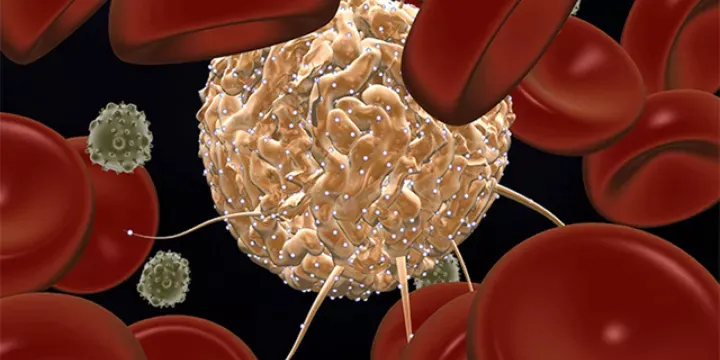
Our investigators conduct innovative research to better illuminate the structure, function, and behavior of cells.
Video could not be played
Selected Publications
Cell biology faculty publish research in a wide range of high-impact, peer-reviewed journals.
Research by the Numbers
-
Top 10
in U.S. in overall National Institutes of Health funding
-
Top 5
in National Institutes of Health funding per investigator
-
>$33M
total extramural funding in 2024
-
~50:50
Ph.D. faculty & M.D./Ph.D. faculty focused on basic and translational science