International Diabetes Federation (IDF) Type 5 Diabetes Working Group
https://idf.org/news-and-resources/news/new-type-5-diabetes-working-group/
Introduction to Type 5 Diabetes:
- Malnutrition Related Diabetes Mellitus (MRDM) was classified by the World Health
- Organization (WHO) in 1985, motivated by 30 years of observational studies in over 50 low- and middle-income countries (LMICs). MRDM described a unique presentation of diabetes among undernourished individuals with very low BMI (<18.5 kg/m2), high glucose levels, increased risk of complications, and high mortality rates. The WHO classification was removed in 1999, due to a cited need for additional research. The loss of this WHO classification has been devastating to the recognition and clinical management of this condition.
- Since 1999, there have been many additional research studies: basic science defining metabolic impact of undernutrition, epidemiologic studies indicating widespread evidence for this condition, and in-depth studies characterizing this form of diabetes as distinct from types 1 and 2 (severe defects in insulin secretion, normal insulin sensitivity, resistance to ketoacidosis, low liver fat, negative antibodies).
- At an international meeting to discuss MRDM in January 2025, there was unanimous consensus that it should be classified as a unique form of diabetes (see the International Consensus statement from The Lancet Global Health). The name “Type 5 Diabetes” was introduced by the International Diabetes Federation at the World Diabetes Congress in April 2025, to heighten global awareness.
- Millions of people are currently believed to be affected globally by MRDM/Type 5 Diabetes. Given the current crisis of widespread food insecurity, the prevalence of this challenging condition is likely to increase steeply.
Purpose and Objectives of Type 5 Diabetes Working Group:
- To raise global awareness of this condition through scientific literature, international meetings, professional networking, and global media.
- To form regional networks of diabetes specialists, develop large datasets of carefully characterized patients, “biobanking” specimens for specialized study, and test management strategies in a variety of settings.
- To develop collaborative research with advice and oversight from global diabetes research thought leaders.
Global Reach and Subgroups
- The Type 5 Diabetes Working Group is chaired by Prof. Meredith Hawkins and currently includes members representing 30 countries spanning South Asia, sub-Saharan Africa, Latin America, Europe, and North America.
- The four subgroups are: Basic Science and Pathophysiology, Epidemiology and Clinical Criteria, Nutrition and Pharmacology, and Advocacy.
Priority Research Areas:
- Precisely defining the clinical, biochemical, and genetic characteristics of type 5 diabetes in diverse geographic settings. Determining whether there are specific biomarkers and/or genetic susceptibility patterns.
- Conducting carefully designed, feasible clinical trials to define appropriate management (both nutritional and pharmacologic) strategies for this condition in low-resource settings.
India: Strategic Research Partnership
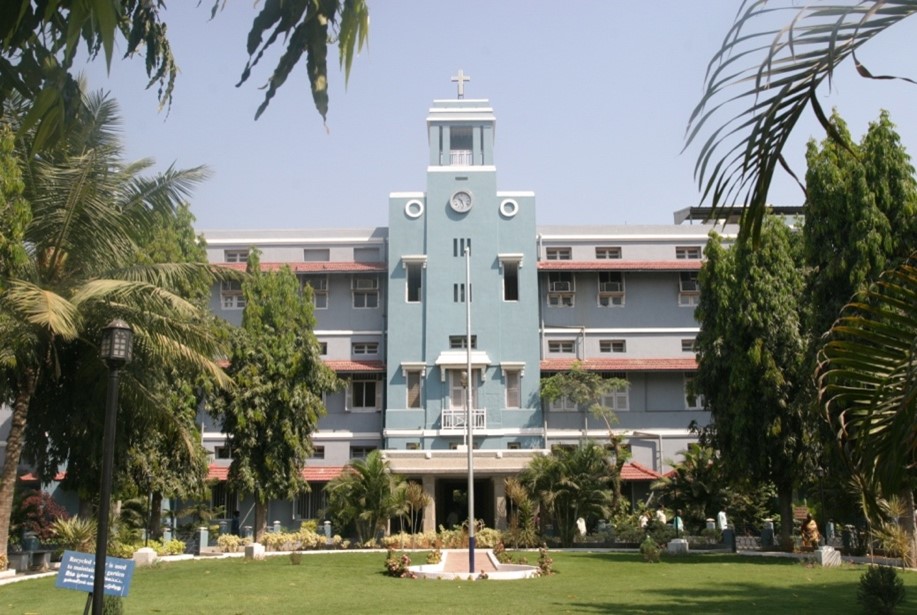
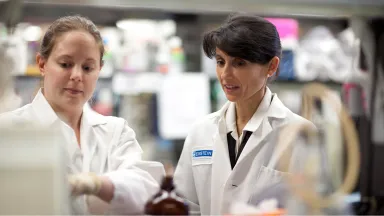
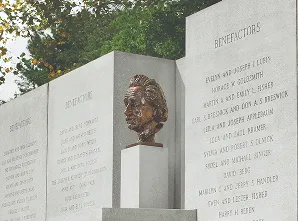
Professor Meredith Hawkins and the Global Diabetes Institute at Albert Einstein College of Medicine in New York, USA, have been partnering with Professor Nihal Thomas and the Endocrinology Department at Christian Medical College Vellore, India since 2010. Together, these teams have been investigating forms of diabetes that are unique to low and middle income countries. This includes the study of individuals with Fibrocalculous Pancreatic Diabetes (FCPD), as well as carefully phenotyping individuals with low BMI who have a non-autoimmune, non-monogenic form of diabetes. For the past twelve years our teams have been collaborating to study such patients using highly sophisticated hormone infusion ('clamp') studies - considered the gold standard for analysis of human metabolism. Of note, CMC Vellore is the only center in India with the capacity to perform these highly involved studies, which also include biopsies of fat and muscle and special imaging of liver, muscle and pancreas. Professors Hawkins and Thomas have presented their findings at several international meetings, including the American Diabetes Association's Annual Scientific Meetings, the East African Diabetes Study Group Congress, and the North East [Indian] Diabetes Congress.
We published our findings in the Diabetes Care journal in June 2022: An Atypical Form of Diabetes Among Individuals With Low BMI.
Doctors and nurses from both Einstein and CMC Vellore have also engaged in a travel exchange to collaborate on research activities and to learn about the practice of medicine in different environments. The partnership between the two institutions has permitted doctors and nurses from both institutions to educate providers at International Continuing Education Meetings, where they have developed a special curriculum to educate providers about diabetes management in low resource settings.
- British Medical Journal South Asia Diabetology Team of the Year, 2015
- Excellence in Patient Care Awards for the Royal College of Physicians, 2017
- World India Diabetes Foundation Award, 2018
India Gallery
Faculty and Students’ Visit to India Blog
Uganda: Comprehensive Diabetes Education
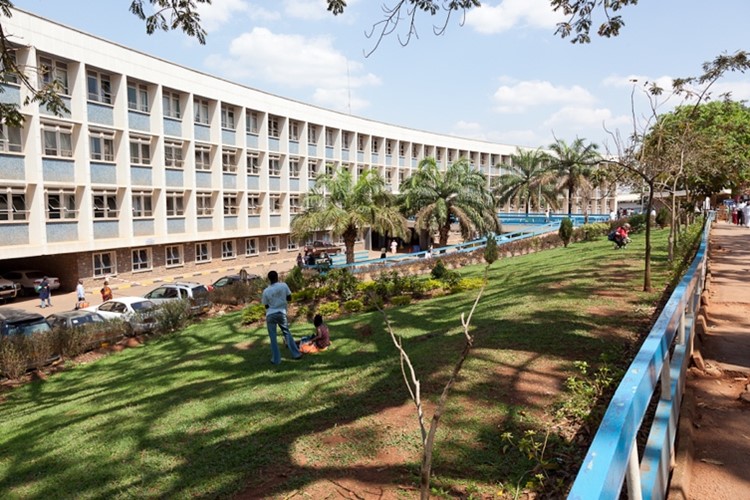
Since 2005, faculty affiliated with the Global Diabetes Institute have been involved in teaching medical students and residents at Makerere University in Kampala, Uganda's largest medical school. Additionally, the Global Diabetes Institute co-sponsored (together with Makerere University) three symposia on comprehensive diabetes management for doctors and nurses from 20 clinics around Uganda (originally funded by the World Diabetes Foundation). Doctors at Makerere and elsewhere are struggling to address Uganda's burgeoning diabetes epidemic without formal Endocrinology training, highlighting the need for more specialized training in diabetes management. Dr. Elizabeth Walker has also worked with members of the Ugandan Ministry of Health and healthcare providers from health facilities around Uganda to develop educational posters and materials for their patients.
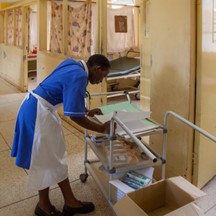
For five consecutive summers, until interrupted by the pandemic, the Global Diabetes Institute sent groups of Einstein medical students to Uganda yearly under the supervision of the Program Manager. Teams went either to Mulago Hospital in Kampala (the National Referral Hospital, affiliated with Makerere University) or to Soroti Regional Referral Hospital in Northeastern Uganda. In both locations, they worked with staff in the diabetes clinics to help patient care through helping with workflow issues, providing patient education (including creating their own materials), organizing charting (including fundraising to provide computers, and setting up electronic medical records), data analysis (and presentation of their data at global health meetings), point-of-care glucose and HbA1c monitoring (again fundraising to bring equipment), and building relationships with staff and patients.
Uganda Gallery
Photos by Gary Goldenberg
Faculty and Students’ Visit to Uganda Blog