Julius Marmur Symposium
The Marmur Symposium is the premiere Graduate Division event of the year, highlighting the research
contributions of our students. Named after Dr. Julius Marmur, this award celebration honors, his lifelong contribution to DNA
structure and yeast genetics and his commitment to graduate education are celebrated annually by the Marmur Research
Awards. Julius Marmur was a member of the Einstein faculty for thirty-three years.
Marmur Awardees present their work to the Einstein community including faculty, students, and invited
applicants that have been accepted to the PhD program. The awardee presentations are followed by a campus-wide poster
session, in which current graduate students showcase the exciting research taking place at Einstein.
31st Annual Julius Marmur Symposium
March 22, 2027
2026 Winners
Ronald Cutler
Consequences of somatic mutations and implications for understanding aging
Mentors: Drs. Jan Vijg & Simone Sidoli
April Lynn Mueller
Precision CD8 T Cell Activation for HIV Immunotherapy
Mentor: Dr. Harris Goldstein
Alexandra Tse
Host Receptor Interactions and Cell Entry Strategies in Emerging Viral Infections
Mentor: Dr. Kartik Chandran
View Past
Awardees
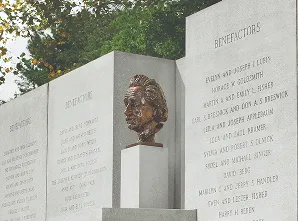
About Dr. Julius Marmur
Julius Marmur is remembered today as one of the founding fathers of molecular biology and for his
enthusiasm and dedication to education.
He developed the first method to isolate highly purified and high quality DNA. He was involved in the
definitive experiments demonstrating the hybridization of DNA strands and the physical characteristics of DNA
annealing. His lifelong commitments to DNA structure, yeast genetics and graduate education are celebrated annually by the Marmur Research Awards. Julius Marmur was a member of the Einstein faculty for thirty-three years.
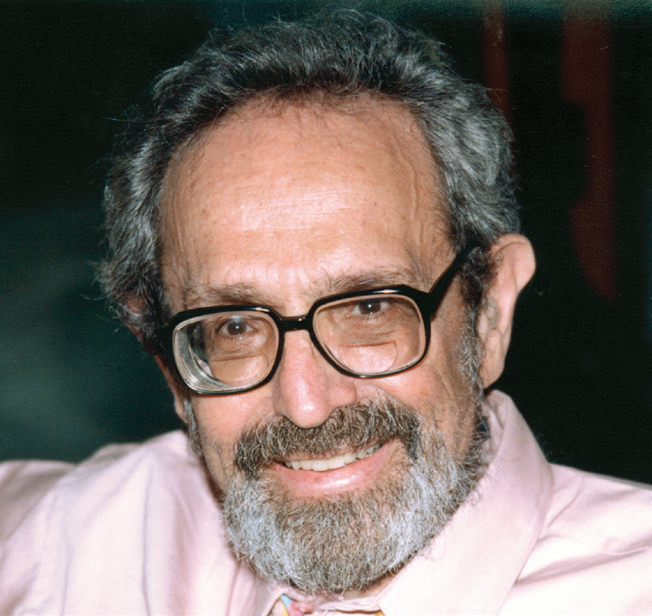 Born in Poland and educated in Canada, Dr. Marmur moved from McGill University in Canada, to Iowa State,
followed by
short stays at the NIH, Rockefeller University and the Pasteur Institute in Paris. At Harvard, he
collaborated
with Paul
Doty and Carl L. Schildkraut (currently Professor of Cell Biology here at Einstein) to generate
technologies to
manipulate and study DNA structure and function. The techniques that Marmur developed emerged as some of
the
most
powerful methods for the study of modern microbial genetics. He and his colleagues developed the cesium
chloride
gradient method to separate small circular DNAs from genomic DNA. He defined the characteristics of DNA
strand
separation, renaturation and hybridization. After Harvard, he moved to Brandeis and then to Einstein, as
a
Professor in
the Departments of Biochemistry and Genetics. At Einstein, he pioneered the use of yeast as an organism
for
genetic and
biochemical studies.
Born in Poland and educated in Canada, Dr. Marmur moved from McGill University in Canada, to Iowa State,
followed by
short stays at the NIH, Rockefeller University and the Pasteur Institute in Paris. At Harvard, he
collaborated
with Paul
Doty and Carl L. Schildkraut (currently Professor of Cell Biology here at Einstein) to generate
technologies to
manipulate and study DNA structure and function. The techniques that Marmur developed emerged as some of
the
most
powerful methods for the study of modern microbial genetics. He and his colleagues developed the cesium
chloride
gradient method to separate small circular DNAs from genomic DNA. He defined the characteristics of DNA
strand
separation, renaturation and hybridization. After Harvard, he moved to Brandeis and then to Einstein, as
a
Professor in
the Departments of Biochemistry and Genetics. At Einstein, he pioneered the use of yeast as an organism
for
genetic and
biochemical studies.
Julius Marmur had many additional responsibilities, professional, civic and personal. He was an
enthusiastic and
dedicated teacher, with a deep concern for the welfare and education of his students. He was always
available to
help
students with scientific problems. He would have been particularly pleased to see his name associated
with a
prize for
the most promising young scientists at the Graduate School to which he dedicated so much of his life.
The Marmur Symposium is the premiere Graduate Division event of the
year,
highlighting the research contributions of our students. Named after Dr. Julius Marmur,
this award celebration
honors, his
lifelong contribution to DNA structure and yeast genetics and his commitment to graduate
education are
celebrated annually by the Marmur Research Awards. Julius Marmur was a member of the Einstein
faculty for
thirty-three years.
Marmur Awardees present their work to the Einstein community
including
faculty, students, and invited applicants that have been accepted to the PhD program. The
awardee
presentations are followed by a campus-wide poster session, in which current graduate students
showcase the
exciting research taking place at Einstein.
Date: Monday, March 21, 2022
Time: 12:00 pm
Hosted via Zoom
View 2022 Awardees
Julius Marmur is remembered today as one of the founding
fathers of molecular biology and
for his enthusiasm and dedication to education.
He developed the first method to isolate highly purified and high quality DNA. He was involved in the
definitive experiments demonstrating the hybridization of DNA strands and the physical
characteristics of
DNA annealing. His lifelong commitments to DNA structure, yeast genetics and graduate education
are
celebrated annually by the Marmur Research Awards. Julius Marmur was a member of the Einstein
faculty for
thirty-three years.
Born in Poland and educated in Canada, Dr. Marmur moved from McGill University in Canada, to Iowa
State,
followed by short stays at the NIH, Rockefeller University and the Pasteur Institute in Paris.
At Harvard,
he collaborated with Paul Doty and Carl L. Schildkraut (currently Professor of Cell Biology here
at
Einstein) to generate technologies to manipulate and study DNA structure and function. The
techniques that
Marmur developed emerged as some of the most powerful methods for the study of modern microbial
genetics. He
and his colleagues developed the cesium chloride gradient method to separate small circular DNAs
from
genomic DNA. He defined the characteristics of DNA strand separation, renaturation and
hybridization. After
Harvard, he moved to Brandeis and then to Einstein, as a Professor in the Departments of
Biochemistry and
Genetics. At Einstein, he pioneered the use of yeast as an organism for genetic and biochemical
studies.
Julius Marmur had many additional responsibilities, professional, civic and personal. He was an
enthusiastic
and dedicated teacher, with a deep concern for the welfare and education of his students. He was
always
available to help students with scientific problems. He would have been particularly pleased to
see his name
associated with a prize for the most promising young scientists at the Graduate School to which
he dedicated
so much of his life.
Previous Julius Marmur Symposiums