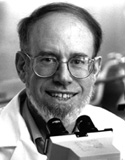
 Stephen Waxman, M.D., Ph.D.
Einstein MSTP Class of
1972
Stephen Waxman, M.D., Ph.D. exemplifies the bridge between basic
research
and clinical medicine. He has served as Professor and Chairman of
Neurology
at Yale since 1986 and is the founding director of the Neuroscience
and
Regeneration Research Center, a collaboration of the Paralyzed
Veterans of
America and United Spinal Association with Yale University, located
at the
VA Medical Center in West Haven, CT.
read more
>
Dr. Waxman is also Professor of Neurobiology and Pharmacology at
Yale, and
Visiting Professor of Neurology, Anatomy and Biology at
University College
London and the Institute of Neurology, London. He is Co-Director
of the
Yale-London Collaboration on CNS Repair.
Dr. Waxman received his BA from Harvard, and his M.D. and Ph.D.
degrees
from Albert Einstein College of Medicine. Following Neurology
Residency at
Boston City Hospital/Harvard Medical School, he held faculty
appointments
at Harvard Medical School, MIT, and Stanford Medical School
prior to
moving to Yale in 1986. Dr.Waxman has received international
recognition
for his research, which focuses molecular techniques on the
brain and
spinal cord, with the goal of finding new therapies for
neurological
disorders such as spinal cord injury and multiple sclerosis.
Dr. Waxman has published more than 780 scientific papers, has
authored the
clinical text Spinal Cord Compression, and has edited six books.
He has
served on the editorial boards of many journals including Brain,
Annals of
Neurology, Trends in Neurosciences, Brain Research, and Muscle
and Nerve,
and he has trained more than one hundred and fifty neurologists
and
neuroscientists who work at institutions around the world.
A member of the National Academy of Medicine, Dr. Waxman has
served on
numerous advisory boards and councils, including the Board of
Scientific
Counselors of the NINDS. He is an Established Investigator of
the National
MS Society. His many awards include the Tuve Award from NIH, the
Distinguished Alumnus Award from Albert Einstein College of
Medicine, the
Dystel Prize from the National MS Society, and the Wartenberg
Award from
the American Academy of Neurology.
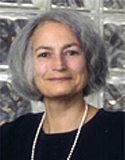
 Jay Berzofsky, M.D., Ph.D.
Einstein MSTP Class of
1973
Jay Berzofsky has been the Chief of the Molecular Immunogenetics and
Vaccine
Research Section of the Metabolism Branch of the National Cancer
Institute,
NIH, since 1987.read more >
He received a Bachelor of Arts Summa cum Laude in Chemistry from
Harvard
University in 1967, and then a M.D. and Ph.D. from Albert
Einstein College
of Medicine in 1973, the latter in protein biochemistry and
biophysics
under J. Peisach, W.E. Blumberg, and B. L. Horecker. After an
internship
in medicine at the Massachusetts General Hospital and a
postdoctoral
fellowship with Alan N. Schechter and Christian B. Anfinsen, Dr.
Berzofsky
moved into immunology through collaborations with Drs. David H.
Sachs and
Gene M. Shearer, and joined the Metabolism Branch of NCI headed
by Dr.
Thomas A. Waldmann, where he has worked since 1976.
Dr. Berzofsky's research has focused on Ir genes, antigen
processing and
presentation by MHC class I and class II molecules, the
structure of
antigenic determinants recognized by T and B cells, and the
application of
these principles to the design of vaccines for AIDS, malaria,
cancer, and
viruses that cause cancer, such as hepatitis C virus. With
regard to
hepatitis C virus, he has identified multiple epitopes
recognized by human
T cells, enhanced one such epitope to make a more potent
vaccine, and
shown protection of a core DNA vaccine in HLA-transgenic mice
challenged
with a surrogate virus expressing the hepatitis C core.
He has published over 460 scientific articles and book chapters.
Dr.
Berzofsky has received an number of awards, including the U.S.
Public
Health Service Superior Service Award, the 31st Michael
Heidelberger
Award, the McLaughlin Visiting Professorship, and the
Australasian Society
for Immunology Visiting Lectureship. He is the past President of
the
American Society for Clinical Investigation, and was recently
elected a
Fellow of the American Association for the Advancement of
Science.
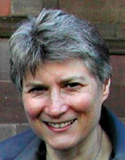
 Donna L. Vogel, M.D., Ph.D.
Einstein MSTP Class of
1977
Donna Vogel is a graduate of Bryn Mawr College, and of the Medical
Scientist
Training Program at the Albert Einstein College of Medicine where
she
received her Ph.D. in developmental biology and her M.D. with a
subspecialty
in endocrinology. read more >
In 1980 Dr. Vogel joined NIH as a clinical fellow in the
National
Institute of Child Health and Human Development, conducting
clinical and
basic research relating to infertility and reproductive
medicine. She
moved to the extramural program in 1987 to manage the
Reproductive
Medicine portfolio, and worked as a program director for 13
years in
positions of increasing responsibility. These included Training
Officer
for the Reproductive Sciences Branch, covering training and
career
development activities; Associate Branch
Chief for Clinical Research, and Acting Deputy Director, Center
for
Population Research.
For many years, Dr. Vogel has been an advisor to NIH on women’s
health, in
various capacities. In 1999 she worked with the Office of
Research on
Women’s Health to create and manage the innovative career
development
grant program, “Building Interdisciplinary Research Careers in
Women’s
Health.”
Dr. Vogel has an ongoing interest in career development and
mentoring for
students, postdocs, and early-career scientists. From 2001 to
2005, Dr.
Vogel worked at the National Cancer Institute. She was the first
Director
of its Fellowship Office, dedicated to enhancing the
professional
experience for postdoctoral fellows. In 2005, she retired from
the Federal
government and became Deputy Director of the Ellison Medical
Foundation in
Bethesda, Maryland. In 2007, Dr. Vogel became the Director of
the
Professional Development Office of the Johns Hopkins Medical
Institutions.
There she works with graduate students, postdoctoral fellows,
and
early-career faculty in the Schools of Medicine, Nursing and
Public
Health.
Dr. Vogel has served on the Executive Council of the American
Society of
Andrology, and has chaired and served on numerous committees
within the
government and for professional organizations. She has organized
many
workshops, published research and administrative papers and book
chapters,
and has received awards from NICHD, the US Public Health
Service,
professional societies, and community groups.
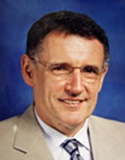
 Ruth J. Muschel, M.D., Ph.D.
Einstein MSTP Class of
1978
Ruth J. Muschel is Professor Emeritus of Molecular Pathology and of
Radiation Oncology and Biology at University of Oxford. Dr.
Muschel’s
research focuses on role of signaling pathways in the response of
cancer
cells to radiation therapy.
read more >
She began her research career at Cornell University where she
worked in
the laboratory of Dr. Efraim Racker on the relationships between
the
proteins of the mitochondrial inner membrane. She graduated from
Cornell
in 1972 and entered the Einstein MSTP program. Her PhD thesis
work was
performed in the laboratory of Dr. Barry Bloom studying
phagocytosis in
macrophages. Following graduation she completed an internship in
Internal
Medicine at New York Hospital Cornell Medical Center and a
residency in
Pathology at Columbia-Presbyterian Medical Center. She then
moved to the
NIH where she was a Medical Staff fellow in the Laboratory of
Tumor
Virology and a Senior Investigator at the NCI. In 1987 she moved
to the
University of Pennsylvania as an Assistant Professor of
Pathology and
Laboratory Medicine. She became a Professor in 1998 and in 2005
moved to
University of Oxford.
Dr. Muschel is the author of over 220 publications and has been
an invited
speaker at meetings around the world. She is the editor of
Cancer Letters,
an Associate Editor of Cancer Research and on the Editorial
Board of
American Journal of Pathology and Molecular Cancer Research. She
was a
member and Chair of the NIH Pathology B Study Section. She is a
member of
and has held numerous leadership positions in the American
Society for
Experimental Pathology, Radiation Research Society and the
American
Association for Cancer Research.
 W. Gillies McKenna, M.D., Ph.D.
Einstein MSTP Class of
1981
Dr. McKenna’s research links basic science studies with
translational-clinical applications. His research has focused on
effects of
radiation on cancer cells and on mechanisms of resistance to
radiation with
the goal of sensitizing cells to radiation by blocking mechanisms
that
control cell survival. His clinical interests are the treatment of
lung
cancer, soft tissue sarcomas, skin cancer, head and neck cancer, and
melanomas. read more >
Professor McKenna was born in Scotland. He received a Bachelors
of Science
in Zoology at the University of Edinburgh in 1972. He was a
member of the
Medical Scientist Training Program at the Albert Einstein
College of
Medicine and received his M.D. and Ph.D. in 1981. His Ph.D.
thesis
research investigated the cleavage patterns of DNA by mammalian
endonucleases. Following an Internship in Medicine at the Johns
Hopkins
University Hospital and a Residency in Radiation Oncology at the
National
Cancer Institute. Dr. McKenna moved to the Department of
Radiation
Oncology at the University of Pennsylvania School of Medicine
where he
rose to become Chairman and Henry K. Pancoast Professor of
Radiation
Oncology. In 2005 he moved to his present position.
He is the author of over 150 research articles and 40
editorials, reviews
and chapters. He has edited a book on Clinical Oncology. He was
the
President of the Radiation Research Society and a member of the
Board of
Scientific Advisors for the National Cancer Institute. He was
the 2005
recipient of the Association for Radiation Research Weiss Medal.
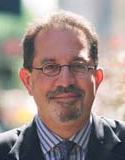 Seth J. Orlow, M.D., Ph.D.
Einstein MSTP Class of
1986
Seth J. Orlow, M.D., Ph.D. is Chairman of Dermatology at New York
University
School of Medicine. NYU’s Dermatology Department is one of the
oldest and
largest leading dermatology departments in the United States. Dr.
Orlow is
only the fifth Chair in the Department’s long and august
history. read more >
A member of the NYU School of Medicine faculty since 1990, Dr.
Orlow has
been founding Director of the Pediatric & Adolescent
Dermatology unit
and, since 2004, Vice Chair for Research. He holds the first
named chair
in Pediatric Dermatology in the United States, having been
appointed the
Samuel Weinberg Professor of Pediatric Dermatology in 2002 at
NYU, where
he is also a Professor of Cell Biology and Pediatrics.
Internationally recognized for his clinical expertise in
childhood,
congenital and genetic disorders affecting the skin, hair and
nails, Dr.
Orlow has been a principal investigator on major grants from the
National
Institute of Arthritis and Musculoskeletal and Skin Diseases
(NIAMS) and
the National Eye Institute (NEI) in the areas of melanoma
therapy and the
molecular and cellular biology of skin and eye pigmentation, and
has also
been an investigator in numerous clinical trials. The author of
more than
200 basic research and clinical peer-reviewed publications as
well as more
than 40 book chapters and reviews, he currently serves on the
editorial
boards of Archives of Dermatology and Pediatric Dermatology.
Dr. Orlow is a Fellow of the American Academy of Dermatology and
the
American Academy of Pediatrics, and a member of the Society for
Pediatric
Dermatology and the Society for Investigative Dermatology.
Board-certified
in both Dermatology and Pediatric Dermatology, he was elected to
the
American Dermatological Association in 2000 and, in 2003, was
honored with
a lifetime achievement award from the American Skin Association.
Dr. Orlow received his AB magna cum laude from Harvard
University, where
he won the award for best thesis in the Biochemical Sciences. He
received
his medical degree and his doctorate (Molecular Pharmacology) as
a Medical
Scientist Training Program student at the Albert Einstein
College of
Medicine. Following an internship in pediatrics at the Mount
Sinai Medical
Center, he completed his residency and fellowship training in
dermatology
at Yale.
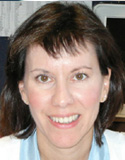 Elizabeth McNally, M.D., Ph.D.
Einstein MSTP Class of
1990
Elizabeth McNally can trace her interest in science to junior high
school.
She received dual bachelor of arts degrees in Biology and Philosophy
from
Barnard College of Columbia University in 1983, and graduated cum
laude,
with honors in Biology. She spent the summer between her junior and
senior
years as a summer student in the lab of Leslie Leinwand at Albert
Einstein,
and enjoyed it so much that she decided to join the M.D.-Ph.D.
program
(MSTP) and continue her work with Dr. Leinwand in the department of
microbiology and immunology, mapping functional domains in myosin.
read more >
She did a residency in Internal Medicine and fellowship in
Cardiovascular
medicine at Brigham and Women’s Hospital in Boston. She was a
research
fellow in the Howard Hughes Institute at Children’s Hospital,
working on
the genetics of muscular dystrophy in Louis Kunkel’s lab. In
1996 she
joined the faculty at the University of Chicago Division of
Biological
Sciences and Pritzker School of Medicine, where she is now a
Professor
with tenure in the Departments of Medicine and Human Genetics.
She is the
director of the University’s Institute for Cardiovascular
Research.
Dr. McNally’s research has focused on the genetics of heart and
muscle
diseases. Her laboratory studies the cellular mechanisms by
which genetic
mutations lead to cardiomyopathy, cardiac arrhythmias, and
vascular spasm.
Her research focuses on the dystrophin glycoprotein complex,
which is
involved in muscular dystrophies, and includes sarcoglycans,
which help
stabilize the plasma membrane of both cardiac and skeletal
muscle.
McNally’s lab has discovered a number of genetic regions
involved in
familial cardiomyopathy that are involved in normal electrical
conduction
in the heart. They have also uncovered genetic associations
between
cardiomyopathy and muscular dystrophy through the study of
sarcoglycans,
and have generated data with animal models showing that
exercising the
muscles in muscular dystrophy may actually help treat the
disease. In her
own laboratory, Dr. McNally has mentored several Ph.D. and
M.D.-Ph.D.
students for their theses. It is this aspect of directing a
laboratory
that Dr. McNally most enjoys.
Dr. McNally has published over 340 scientific papers and book
chapters.
She has received a number of awards and honors including
membership in
Alpha Omega Alpha upon graduating medical school, a Charles E.
Culpeper
Medical Scholar Award, an American Heart Association Established
Investigator Award and the Burroughs Wellcome Fund Clinical
Scientist
Translation Award. She is a member of the American Heart
Association,
American Society of Clinical Investigation, the Association of
University
Cardiologists, and the National Academy of Medicine. In 2022 Dr.
McNally
was named Editor-in-Chief of the Journal of Clinical
Investigation, the
first woman to hold that position.